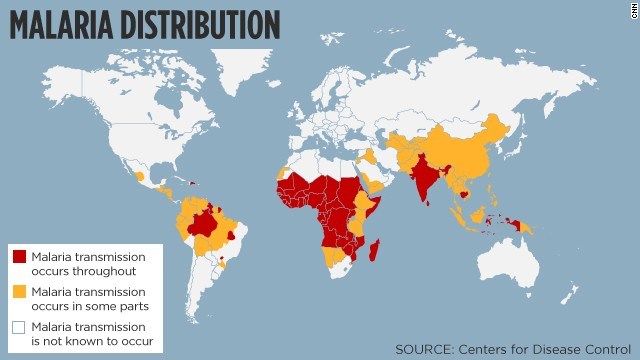
- Check on malaria risk for tropical and sub-tropical destinations — Find out the malaria risk for each destination. In some countries, only part of the territory is malarial. Heavily built urban areas are often malaria-free.
- Short visit? Take anti-malaria drugs — You are in a new place, doing new things, some of which might take you into a malaria zone. It’s best to take a regime of malaria prophylaxis drugs.
- Long stay? Possibly not — Your doctor or travel clinic will never advise you not to take anti-malaria drugs. But many expatriate residents and most local people don’t. Instead, they are diligent about avoiding mosquito bites and getting tested at the first sign of illness.
- Get tested — If you feel at all feverish in a malaria zone or up to several weeks after leaving, get tested immediately. This applies whether or not you’ve been taking anti-malaria drugs, since they are not 100% effective.
How to Travel is not a medical authority and offers the following for guidance only.
 Malaria is probably the biggest health risk you run when visiting many tropical and even sub-tropical countries. Just one mosquito is all it takes.
There’s an African proverb meant to inspire people starting from humble beginnings, but it has a backhanded meaning, too.
If you think you are too small to make a difference, you haven’t spent a night with a mosquito.
Long efforts have yet to produce a reliable malaria vaccine, although victory seems near. Until that happy day, what can you do to reduce your risk?
First, find out the risk for malaria in your destinations. There are big differences between regions of a country, city and country and times of the year. You should check these facts for other mosquito-borne diseases as well (zika, dengue, yellow fever and chikungunya).
- CDC map of Malaria distribution. Unlike the map above, you can drill down on this one to see sub-national information.
- CDC map of Zika distribution. There’s no sub-country drill down on this one, but there are links to country-specific pages.
- CDC map of Dengue distribution. No drill-down on this one either, but there are links to national news updates on dengue outbreaks.
- CDC map of Yellow Fever distribution (South America & Africa). There are no drill-downs and no onward links.
- CDC map of Chikungunya distribution. No drill-downs here either. Note that chikungunya is rarely fatal, but is important because it is sometimes misdiagnosed as dengue (or vice versa).
Then take measures to prevent being bitten and consider prophylactic drugs (malaria only). If you start to feel ill, get a blood test pronto.
Does your destination have malaria risk?
The first step in malaria prevention is to get the facts: check your proposed destinations against the distribution and risk of malaria.
- Country — Don’t rely on maps or tables that show malaria distribution by country (even the one above is not locally precise). Malaria occurs in only a small part of many countries. For example, it’s true that South Africa has malaria, but only in the north-eastern lowveld (including Kruger Park) and the north-eastern part of KwaZulu-Natal.
- Cities — Even in malaria zones, you’re at fairly low risk in built urban areas — the anopheles mosquito prefers vegetation and clean water. For that reason, leafy suburbs can have a much higher incidence of malaria than built city centers.
- Altitude — The anopheles mosquito likes hot weather. Since temperatures decline the higher you go, mountainous areas are often malaria-free. However, as the climate gets warmer in countries like Ethiopia, the altitudes at which malaria appears are getting higher.
- Seasons — While the anopheles mosquito can occur year round, there’s always a “mosquito season” when they’re much more prevalent.
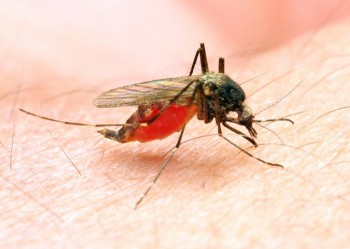 Don’t forget to consider whether one of your planned activities will take you from a low-risk zone to a high-risk zone. Independent travelers often change their plans when a great opportunity arises. Perhaps you planned on passing through Dar es Salaam, while en route to your planned activities in Zanzibar and on Mt. Kilimanjaro. But while in Dar you got an chance for a quick safari to Mikumi National Park, a malaria area only four hours away by road. You will have to get on one of the fast acting anti-malaria drugs immediately.
CDC Malaria Information by Country Table
Look up your destination countries in the CDC’s Malaria Information by Country Table. The table will provide you with:
- Areas of the country with malaria — The CDC shows that, in some counties, only certain areas have a malaria problem. They also provide elevation information, since malarial mosquitoes do not appear above a certain elevation.
- Risk to US travelers — The CDC acknowledges that, if US travelers don’t frequent a country or area of a country, the information may not be entirely accurate. How many US travelers are wandering around Yemen these days? Nonetheless, it should be good information for locations commonly visited by travelers of any nationality.
- Drug resistance — Many older anti-malaria drugs are now ineffective, since the parasites have developed immunity.
- Type of malaria — Falciparum is particularly nasty. It can come on strong and get deadly very fast. If you’re going to a malaria zone where falciparum is the dominant variety, take extra caution.
- Recommended prophylactic drugs — Follow the CDC. Pay attention to drug resistance, then choose your weapon. Drug combinations are common, especially where resistance is a problem. Note that Malarone is effective, does not have many side effects, but is expensive and can be hard to find in some countries. Primaquine and Doxycycline are inexpensive, but are known to cause stomach problems. Mefloquine requires that you start 2 weeks before entering a malaria zone and continue for 4 weeks after leaving. It is also notorious for inducing vivid dreams in some people.
- Other location info — There’s supplemental information on locations within the country
Malaria prevention: anti-malaria drugs
Malaria is a serious disease and every health authority will advise you that malaria prevention means you should take anti-malaria drugs, even if the actual risk is slight. Most locals and many expatriates resident in malaria zones don’t take anti-malaria drugs. Local people may have at least partial resistance to the local strain of malaria parasite. Expats tend to live in cities and towns where the risk is reduced. Instead, both locals and expats use all the other preventive strategies against being bitten (see below).
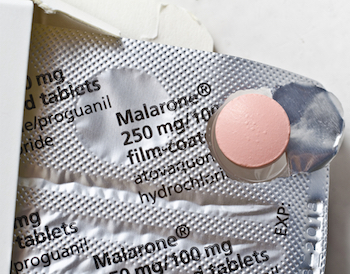
You, as a short-term visitor without partial immunity, should consider taking anti-malarial drugs. There are at least 5 types of anti-malaria drug, but you must make sure you use the right one on the right schedule.
After you’ve figured out what the risk is and what drugs are recommended, using the CDC’s table, read their table on Choosing a Drug to Prevent Malaria for details on the pros and cons of each one.
- Get the right drug — Your family doctor will probably not know what drug will be effective at your destinations. Travel clinics will know. If you don’t have access to a travel clinic, you and your doctor can consult the CDC website.
- Start taking the drug before entering the malaria zone — Anti-malaria drugs create a chemical condition in your blood that is hostile to the malaria plasmodium. They take between one day and two weeks to become effective, so follow the instructions exactly and don’t leave it so late that you’ll be at risk.
- Follow the full course of treatment — Some of the drugs have to be taken up to 4 weeks after leaving the malaria zone. It might seem like a long time, when you’re far away, even back home, but you’re still vulnerable to the parasite until the drug regimen is complete. The CDC provides instructions on how to take the 5 types of anti-malaria drugs.
- Buy anti-malaria drugs at your destination — If you have enough time before going to a high risk malaria zone, anti-malaria drugs are almost always much less expensive in countries with malaria than in countries without malaria. They are widely available and can usually be bought across the counter without a prescription. Beware of fakes!
- Manage switching between drugs — Suppose you are suffering side effects of your anti-malaria drug. Or suppose you can’t find more of the drug you started on, but other anti-malaria drugs are available. The CDC has advise on how to switch anti-malaria drugs.
Malaria prevention: avoiding mosquito bites
 Almost all local people and most resident expatriates in malaria zones do not take anti-malaria drugs, especially in urban areas. This strategy has higher risks for travelers because you won’t have as much control over your environment as locals and expatriates do. Unless your trip is entirely scripted, you’re not really sure where you’ll go in a country with a malaria problem. You might arrive somewhere to find that your lodge has swarms of mosquitos and holes in the nets. Since it takes weeks for anti-malaria drugs to be effective, it’s already too late to start.
Before you make this decision, consider:
- Duration of exposure — How long do you plan to visit the country? If it’s a short visit, maybe it’s no big deal to take anti-malarial drugs.
- Season — The dry cool seasons favored by most travelers have fewer mosquitoes.
- Urban or rural? — Will you be going to rural areas, especially forested areas? Note that leafy suburbs of many major tropical cities also have malarial mosquitos. Ask the locals.
- Evenings outdoors — Will you often be out at night? Anopheles mosquitos favor dusk, evening and dawn.
If you then choose not to take anti-malaria drugs, you must strictly practice several behaviors to minimize the risk:
- Clothing — From dusk till dawn you should wear long-sleeved shirts with collars, long pants, tight-weave socks and closed-toe shoes.
- Insect repellant — You should use a quality insect repellant on all exposed skin (and socks) when out at night.
- Mosquito nets — Except in rooms with powerful air-conditioning, you should sleep under an insecticide-treated mosquito net every night. While it’s easy to spot any holes in your net, you may not know whether it is treated. Should your skin contact an untreated net while sleeping, you can be sure that a mosquito will find you.
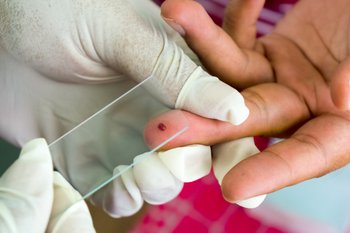
- Feeling sick? Get a malaria test immediately — This is an absolute requirement if you do not use anti-malaria drugs. At the first signs of fever or general sickness (see below), get to a clinic as soon as possible for a simple pin-prick malaria test. Even if you slip up on one of the first three behaviors, do not fail on this one. If the test is positive, you can get on curative drugs immediately.
Then there’s zika! And dengue! And yellow fever! And chikungunya!
Is there any doubt that the mosquito is truly the most malevolent vector for disease on the planet? And so so numerous!
 Zika, dengue and chikungunya are all borne by the aedes aegypti and aedes albopictus mosquitos. While the a. aegypti mosquito is also the vector for yellow fever, a. albopictus is capable of wider spread into cooler climates. Both species do well in urban environments and bite mostly during the day.
Don’t get too alarmed. It’s possible to live for years in a steamy African city with no protections except a bed net and not get any of them.
Behaviors to prevent malaria mosquitos also provide protection against mosquitos carrying the other diseases. But you only have to drop your guard or be unlucky with one mosquito and — bam! — you’re sick.
Do you have malaria?
The symptoms are widespread and come on fast — there’s no doubt that you’re getting sick. You could have any or all of these symptoms.
- Fever
- Headache
- Nausea
- Hot and cold shakes
- Body aches
- Fatigue
Even if you have a mild form of a single symptom, your assumption must be that you have malaria. In fact, if you’re taking anti-malaria drugs, you could still have the disease, but the drugs are only partly effective, suppressing the symptoms.
If it is malaria, it will quickly get worse. So, it’s off to the clinic for a quick and inexpensive finger-prick blood test. If the test is positive, you get treatment immediately. It’s very important to treat malaria at the early stages, when recovery can be fairly quick. Get the blood test.
If you’re traveling with a young child, unable to express feelings of sickness, you have to be extra sensitive to his or her physical state. Malaria can develop very fast in children. Surely, you will practice all preventative strategies with your child. Yet, you can still make a case for providing anti-malarial drugs for young children, even if you don’t take them yourself. See the CDC page, Traveling with infants and children for more.

eric

15 years in Africa
After leaving a malaria zone
There’s one more caution: if you leave a “malaria country” for another country that has no malaria problem (home, maybe), you could come down with symptoms of malaria. Symptoms can appear from 8 to 18 days after leaving the malaria zone. And symptoms could appear even if you took anti-malaria drugs, because they’re not 100% effective. In fact, the drugs may diminish the symptoms, even to the point where you don’t think you’re that sick.
Then there’s a problem with diagnosis and testing, because the doctor hasn’t seen malaria or at least isn’t expecting to see it. It’s up to you to inform your doctor that you have recently arrived from a malaria zone. If you don’t, there’s a good chance of misdiagnosis and you’ll only get sicker before the correct diagnosis is made. Malaria test kits may not be available on the spot either.