- Traveling solo is a challenge and a revelation — Traveling alone is both a challenge (especially for solo women) and a liberation. Do everything yourself, reinvent yourself, be yourself. Don’t worry, you will make friends.
- Travel as a couple or with a friend can deepen your relationship (or break it) — Traveling with a companion can be one of the best experiences you can have together, as long as you agree about the major decisions and don’t sweat the small stuff. Have you ever spent so much time together day and day out?
- Don’t want to travel solo, but don’t have a companion? — If you don’t have a traveling companion, you can find one, either before you leave or on the road.
- Got kids? Take them! — Traveling with children is a huge gift to them. Family travel will cost more and has limitations, but is not as restrictive as many assume.
- You and some travel buddies? — Traveling with two or more travel buddies can be done, but we don’t recommend it. It’s harder to agree what to do. Finances can get hopelessly mixed. Unless you’re really close and all have mature attitudes, you risk disagreeing so much that the group breaks up.
- Go with a tour? Ah… no — Most tours have rigid itineraries, so the independence is gone from independent travel. Yet, first time travelers who need more confidence can use some of the (rare) flexible tours as a half-way step to independent travel.
The choice of whether to travel alone or with a travel companion is one of the biggest decisions you can make because it will color everything about your trip. As veteran travel writer Rob Sangster puts it, “Don’t think first about who to travel with; think first about whether to travel with anyone.”
It’s definitely easier to travel with someone as long as you are very compatible and agree about the major decisions. Beware the tendency to cocoon and filter the experience through each other rather than reaching out to people.
On second thought, maybe you should go solo. It can be a challenge from time to time, but it’s entirely your show. All the experience is raw and unfiltered. You’ll have to reach out to people.
Parents may think traveling with children is even more challenging, especially if the kids are young. And it’s true that you’ll have to select destinations and activities with them in mind. Your travel might be slower and maybe your style won’t test your own comfort minimums.
Senior travelers and those with some medical conditions might gauge their physical readiness for strenuous experiences or roughing it on an uber-low budget. Maybe you’re not Yuichiro Miura (who summited Everest at 80), but older travelers are entirely capable of most trips.
LGBTQ travelers are encouraged to move beyond the usual “LGBT-friendly” destinations, but be aware of the law and people’s attitudes in new destinations. Give Uganda a miss!
Travelers with disabilities have some research to do to figure out how much difficulty they can expect for mobility, vision, hearing or other conditions. Some travelers have done amazing trips regardless.
Travel alone
Traveling solo can be the ultimate tonic, opening a world of possibilities selected and interpreted only by you. It’s also more challenging than traveling with a companion.
- Be flexible — You have the flexibility to go where you want and do what you want. Nobody will hold you back from an “out of character” decision.

- Liberate yourself — You won’t have your experiences filtered through a companion’s viewpoint. Nor will you have to deal with a companion’s emotional turbulence.
- Design the new you — You can tweak elements of your
personality or public persona — who says you can’t experiment? Grow out your corporate hair style, unbutton your reservations and be brash (or quit being the life-of-the-party and become more contemplative), forgo make up, become a karaoke star… whatever your heart desires. Because it’s only you who decides. It can be really exhilarating and, if the tweak doesn’t work, you can adjust it or revert to the Old You. - Bust out of your shell — If you’re a natural introvert, you will be pulled out of your shell, at least to take care of daily necessities. You will encounter new people every day and have to communicate, sometimes across a language barrier.
- Make new friends — Traveling solo, you can’t help but make friends with other travelers and local people, many of them very different from any friends you’ve had before. These friendships tend to be fleeting because soon you’ll be parted by physical distance. Yet, these relationships will widen your appreciation for different cultures. And that awareness is lasting. Your world will be permanently wider.
- Reflect on your life — You will be gifted with precious opportunities for introspection and personal growth. You will have plenty of time to reflect on your life and what’s really important.
- Gain confidence — You are guaranteed to return home more energetic, confident, focused and — yes — worldly.
For many of us, traveling alone for an extended period is life changing. You might be tested at the start, but it’s worth it.
When you’re traveling, you are what you are right there and then. People don’t have your past to hold against you. No yesterdays on the road.
— William Least Heat-Moon
Challenges
Traveling alone means facing the world on your own. That can be a challenge for some, especially in a foreign environment where you may not understand the language and culture. How do you respond to these questions?
- Do you relish taking on new experiences every day?
- How will you respond to sensory overload if you do not have anyone to help you filter and understand it all?
- Are you okay making fast decisions with limited information?
- Can you handle the inevitable hassles with calmness and determination?
- Can you fill all that “alone time” and manage occasional feelings of disconnection and loneliness?
 If you don’t have positive answers to those questions, you might be too intimidated to travel alone. But don’t give up. Instead, try a short trip by yourself — even just a weekend — to a neighboring city. It’s possible that it will take you longer than that to get used to traveling alone, but you’ll get a taste.
Most people who are unsure about traveling alone take the first flight regardless and do just fine. You can do that, too. You will meet people. You will make friends. You will learn how to cope (with help from us!) and you will have a great time. It will be just you and the world. No filters, no support system, no excuses. You will make all your own decisions. Once you get used to it, you’ll be brimming with confidence and ready for each new day.

eric

Solo travel catharsis
Solo women travelers
Lots of women can and do travel solo, stay safe and enjoy themselves. Some of your friends and relatives might freak out if you tell them you’re heading out on your own. They should relax and wait for your glorious photos.
You may not want to travel unless you can go with a friend, but this could cause unnecessary delay to your travel dream or even scuttle it entirely. If you must travel with a friend, the usual rules about traveling companions apply (see below) and should not be rushed.
I f you leave on your adventure alone, chances are excellent that you will meet up with other women (or men) and travel with them for a while. Look for a traveling companion in the traveler ghetto at your destination. Most potential travel buddies will be fine, but be careful that you’re not joining up with someone who will be an emotional or financial burden.
As a solo woman traveler, you have two security issues to manage. First are the general safety precautions that all travelers must observe. As a solo woman, you will be perceived as an easier victim than most men, so you need to be extra diligent and never slip up.
Second is the thorny issue of sexual harassment and the risk of sexual assault. While male attitudes towards women in general — and foreign women in particular — vary hugely by culture, you can be victimized in any country. But you can’t let paranoia ruin your trip. Know how to minimize your risk and how to handle yourself if a situation starts to spin out of control.
And then have a great time.
Traveling is like flirting with life. It’s like saying, “I would stay and love you, but I have to go; this is my station.”
— Lisa St. Aubin de Terán
Travel with a companion

There are many types of travel companion: straight couples, samesex couples, best friends and, increasingly, “travel buddies,” strangers who have sought a traveling companion.
If you’re in a long-term relationship with your companion, travel together can be one of the most amazing experiences you will ever share. Just be sure to plan together before you go, to make sure you understand one another.
There aint no surer way to find out whether you like people or hate them than to travel with them.
— Mark Twain
If your travel companion is not someone you’ve planned and started your trip with, you don’t require so much agreement, since you can easily split up if it’s not working out.
There are so many benefits of travel together. Some are common to all traveling companions, while others are reserved for long-term partners or close friends. All traveling companions have these advantages:
- No loneliness — Your companion is there.
- Getting away from the tourist trail — Many solo travelers stick pretty close to the tourist trail so that they can meet other travelers. Heading off to a place where you’re the only foreigner can be a challenge. Traveling with a companion makes it easier.
- Task sharing — You can split the daily task routine. It’s easy, since the logistics of daily living aren’t as demanding as they are at home. One of you can get some drinks from a shop, while the other is online looking for your next lodge.
- Lower costs — Shared rooms are less per person than single rooms.
- Shared achievement — Challenges faced and overcome together will strengthen your relationship.
Long-term partners or close friends can benefit more:
- More time together — You can dedicate much more of your time to doing fun stuff together than you did at home.
- Reduced stuff — If you’re traveling with someone close, you can share some gear and consumables, reducing the volume and weight each of you has to pack. You need only one tube of toothpaste.
- More shared tasks — While you may not wash the laundry of a travel buddy, you can probably do the undies of a long-term partner while she’s online.
- Support — You have support managing difficulties, including illness and injury. Long-term partners or close friends are more likely to stay with you and see it through — and you should show equal loyalty to him or her, too.
- Better relationship — Since most of the stresses and day-to-day burdens of home are removed and you’re traveling to have a good time, it’s rare that travel makes things worse between you and your companion. An eventful trip can deepen your bond in profound and lasting ways. Enchanting moments together in distant places will be treasured memories for both of you.
While travel together with a companion is, in many ways, easier than travel alone, it does come with a few possible problems:
- Really close… all the time — It will certainly test your ability to communicate and compromise at close quarters. Even if you travel with a partner of many years, you may never have spent so much time together day after day. Small irritants can morph into something more.
- Referencing each other — You will have someone to relate to, although this creates a risk that you will filter and interpret the experience through each other instead of taking on your experience raw, like solo travelers do.
- Living in a bubble — You won’t reach out to meet new people as much as you would if you travel alone. Some traveling couples create a bubble around themselves, don’t relate to new people much and thereby miss some of the best parts of travel.
Two great talkers will not travel far together.
— Spanish proverb
Who’s a good traveling companion?
Ernest Hemingway once wrote, “Never go on trips with anyone you do not love,” but Hemingway didn’t consider that someone you love could be a lousy traveling companion. We say: never go on trips with anyone you do not like. And, no matter what your relationship, make sure you understand one another before you hit the road.
Travel together will be an intense experience. You will usually spend all day, every day together — when was the last time you did that for an extended period? This is a huge opportunity to get to know one another better and deepen your bond, but it can also aggravate existing incompatibilities.
Develop your travel plan together, starting with your travel goals. You simply must balance your needs and wants. Make sure that you talk through each step, without the more assertive one making assumptions and foisting decisions.
- When and how long? — Can you get time away for travel at the same time? Can both of you stay away for the same trip duration?
- Destinations & activities — Of course, your companion will ideally want to go to the same places and do the same activities as you. If not, you should try to meet each other’s top priorities.
- Travel style — Take special care to understand each other’s travel style preferences. One of you may be willing to “rough it” in cheap lodges that would make the other miserable. Or one of you may be more energetic about doing things, while the other wants to relax more.
- Cost — Closely related to style is cost. Do you agree about the maximum amount you are prepared to spend for the trip? Do you intend to pool your finances on the road? If not, what costs will be shared and how do you keep track? For example, you could pool costs for rooms that you share and keep track in an expenditures journal.
- Health or disability — If one of you has a health issue or disability, is the other able to make the compromises to accommodate it?
- Task sharing — Are you both good at task-sharing? Tasks in your daily routine are different (and simpler) than most tasks at home. Sharing equitably will leave more time for fun.
- If it’s not working — If something goes seriously wrong between you, are you prepared to slow down or stop moving and perhaps upgrade your style while you work it out? In a worst case scenario, could you split-up en route or return home early?
Once you understand each other and agree on the basics, traveling can be really easy. Then you’ll have the freedom to enjoy your travel together.
When traveling with someone, take large doses of patience and tolerance with your morning coffee.
— Helen Hayes
How do you find a “travel buddy?”
 If you don’t want to travel alone and don’t have a prospective traveling companion, you can always try to find a travel buddy. Before you start your search, keep in mind that the same compatibility issues discussed above still apply, but with the added difficulty of trying to make a match with a stranger.
You can start at home or once you’re on your trip. Where do you find a traveling companion?
- Affinity groups — While you are still at home, look to local groups of people like yourself (single women, cycling clubs, retired people, fellow musicians, veterans, etc.), where you’re more likely to find someone whose travel desires and style could be close to your own.
- Travel companion websites — Check websites (search: “find travel companion”). Bear in mind that some people seeking travel companions are scammers, escorts or individuals with bad finances looking for a sugar daddy or sugar mama to subsidize their travel.
- Travel Companion Exchange
- Lonely Planet’s forum page for travel companions
- Travelbuddies (app)
- After you start your trip — If you can be patient, a good place to meet someone is in a traveler ghetto. Your potential companion has already got herself/himself organized and to the same place you wanted to go. You might even find him or her doing the same activity you’re doing and traveling in the same style as you. Since it would be unusual that a traveling companion that you meet on the road would have the same timeline and itinerary as you, you may have to string two or more companions in series or spend some time traveling solo.
How do you vet someone as a traveling companion before you start your trip?
- Give yourself enough time — Don’t leave it too late and don’t rush. You need to get to know your prospective companion over a series of conversations.
- Read the site profile and reviews — Companion websites try to vet the people registering on them. Consider whether the vetting process is credible.
- Check social media — If you’ve found someone on the internet, she or he surely is on Facebook or other social media. Ask to friend on FB or join other social media and see what comes up. If your would-be companion won’t friend you or claims not to have any social media profiles at all, even though he or she was savvy enough to register on a website, maybe you should look elsewhere for company.
- Do a Google search — In your initial exchanges, you should ask for a little bit of background. Where is she from? Where did she go to school? Who is she working for? If your companion is reluctant to say much or the answers are vague, you should be suspicious. Take what info you can get and dig into the net for more.
- Meet in person — The very best thing you can do is meet any prospective companion in person well before any commitments are made. Preferably, you can have several meetings to develop an idea of whether the person is appropriate. The usual cautions apply here, as well — your first meeting (at least) should be in a public place around other people.
- Use a visual messaging service — If it’s not possible to meet, use a visual messaging service such as Skype. Do not rely solely on written communication.
- Compare Plan results — Have your prospective companion consult the Plan pages on How to Travel, then compare the results and see what fits, what doesn’t and whether compromise is possible.
- Get confirmed contact info — Before you go anywhere with your new friend, get a home address, telephone number and any other details you can. Try to ensure that the info is true by looking them up in online directories. This information should be given to a person you trust at home, in case something goes seriously wrong.
- Do a Try-Out Trip — If you’re not sure about your companion, the two of you might agree to a short Try-Out Trip to start. The result will tell you whether being so close and making decisions together will work on a more ambitious trip — or not.
LGBT travel partners
LGBT travel can be remarkably easy, provided you are aware of cultural attitudes at your destinations and prepare for your safety and comfort.
 Many traditional cultures and conservative societies frown on gay sex or even LGBT expression. You can receive a hostile reception if you’re out or outed. It’s not just, but if you want to visit such traditional places, take steps to minimize the risks.
In some countries, such retrograde attitudes have translated into highly punitive laws against gay and lesbian sex. (There’s an astonishing number of countries where sex between men is illegal, but sex between women is not. Women should be careful with same-sex partners nonetheless.) It’s possible you could end up charged with a serious criminal offense simply for sleeping in the same bed with your partner of many years, although in practice such prosecutions are rare. In some countries where gay sex is illegal, enforcement is entirely ignored. On the other hand, in countries where the penalties are severe, there is the additional risk of extortion by the cops and others if you are accused of an illegal act.
Just be sure you know the facts for the countries you plan to visit.
You can make a convincing argument that countries with backward laws don’t deserve your money. The easiest solution is to go to known LGBT-friendly destinations, where you can relax and be as open in your affections as you want. The list of such places is limited, though, and many have devolved into tourist traps… for LGBT tourists.
Hiding your identity might not be something you find acceptable or feel comfortable doing. Research your destination country carefully and decide whether the benefits outweigh the costs. If you end up deciding that keeping your identity private makes sense for you, here are some options to consider to help you avoid being outed and stay safe:
- Pretend you’re traveling with your best friend. Strictly platonic, y’know.
- Be careful about wardrobe and grooming. You may not have to cloak your personality entirely, but be careful about how your appearance could signal your identity.
- Avoid public displays of affection. Even a quick kiss or holding hands could get you in trouble. (Ironically, in Arab countries and South Asia, it’s not at all unusual for male buddies to hold hands in public.)
- Get twin beds in your room.
- If you’re in an open relationship or LGBT traveling solo, be very careful about new partners. Health risks are elevated in some countries, while blackmail scams targeted at “law-breaking” foreigners may also be attractive for local crooks.
While there are some countries where it’s just not worth it — Uganda, Saudi Arabia and Iran spring to mind — you can still enjoy hassle-free travel in most of the world with your partner.
Thanks to Elah F. for help with this section. We would appreciate input from a transgender traveler on how to travel as your true gender when your passport says something else.
Online resources Expand- Equaldex — Crowd-sourced information on the status of LGBT worldwide. A handy map shows current information on the legality of LGBT activity in most countries. There are many other measures helpful to LGBT travelers. Zoom in to get details on all your destination countries.
- ilga — International lesbian, gap, bisexual, trans and intersex association is a federation of 120o organizations from 125 countries. Similar information to Equaldex, but not so many issues covered. Presentation is less interactive than Equaldex.
- 76crimes — Tagline: “The human toll of 76 countries’ anti-gay laws. The struggle to repeal them.” Stories about real people and news about the good and the bad.
- US State Dept. — The page on LGBTI travel has condensed essential info for travelers. Travelers from other countries can consult this page, since the UK, Canadian and Australian governments do not provide even minimal info. Good on ya, yanks.
- IGLTA — International Gay & Lesbian Travel Association. This is a commercial site, selling gay, lesbian and trans vacations. At least you’ll get an idea of destinations and events.
Travel with kids
Traveling with kids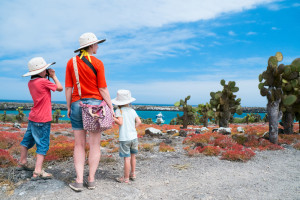 may seem so fraught with difficulties that many parents surrender and choose point-to-point resort vacations with the kids. Yet, travel with children is not only possible but enjoyable, especially with kids who don’t need constant supervision.
As expected, there are compromises:
- Cost — No surprise at all: it costs more for every expense line.
- Pace — The pace of travel will be slower than it would if you travel solo or with your partner only. Kids usually don’t have the same stamina and they’ll melt down if stressed. That means your trip will have fewer destinations and activities in the time available, but it’s worth it for family harmony.
- Destination preferences — The preferences of older kids on where to go should be considered, but that doesn’t mean Disneyland. Keep in mind that really different weather, food, language, culture, hygiene and the all-round strangeness and intensity of the street might be a bit much for kids, especially younger ones.
- Activity preferences — Your choice of activities will be constrained by what the kids are able to do. Some activities that you would do on your own will be too physically or mentally challenging for children (varies with a child’s age and abilities).
- Education — As if the kids aren’t getting some incredible experience, you may have to make provisions for formal education while on the road. This is more important on longer trips, where the school year back home will be truncated or entirely missed. It’s also more important for older kids. Whereas you can teach younger kids their basics, you might not be knowledgeable enough for some high school subjects.
Strategies to make it work with kids
- Higher style — Your kids might need better quality transportation and better rooms for the night. A long ride in a clunky country bus, followed by a stuffy room with a grotty bathroom down the hall might inspire your kids to mutiny. Since the vast majority of lodge rooms are for no more than two people plus (maybe) a cot, you’ll have to spend more time online finding a lodge with appropriate rooms for all of you. An attached bath is well worth it.
- Routines — The city and the room may change, but if basic daily routines are the same, the kids will be anchored to something familiar. Then the new and the strange will be better balanced. Get them into the personal hygiene, laundry, bedtime reading and other everyday tasks.
- A retreat — The more stressful the journey for your kids, the more important it is to have a peaceful and spacious retreat where everyone can decompress. That might mean getting out of the center of a city, to a place in the suburbs or even out of town entirely, to a beach or country place. Read your kids’ stress and make a plan for some relief.
- Activities picked by the kids — You may have a full itinerary of important things to do, but you have to give-in to the kids just enough to keep them happy. You didn’t go all the way to France to blow a day at Paris Disneyland, but — yes — you’re going there! In many places, the kids won’t have a clue what the options are. You’ll have to do a bit of research and suggest something.
Documents required for minor children
The Hague Convention on the Civil Aspects of Child Abduction is an international effort to prevent abduction of minor children and return abducted children to their lawful parent(s) or guardians. Most abductions are by one of the parents, who takes the child/children and flees across international borders.
To prevent abductions, adults traveling across borders with minor children may be required to prove not only legal guardianship, but also the permission of other legally responsible parties (normally the other natural parent).
An example is South Africa. At time of writing, South Africa required:
- An original birth certificate or certified copies less than 3 months old for any child under the age of 18, with the name of both parents on it. If the birth certificate is not in one of South Africa’s official languages, an English translation is required from an accredited translator.
- If only one parent is traveling with the child, a notarized letter of permission from the other parent is required.
- A death certificate for the other parent on the birth certificate is also accepted.
- If the traveling parent has sole custody of the child, legal documents proving as much must be provided.
- All of these documents must be no more than 3 months old.
Perhaps no other country requires as much documentation to enter the country with a child. But the point is you must know what each country requires and make sure you have sufficient documentation prior to departure from home.
If you don’t have custody documents, there’s a sneaky workaround. Find a traveler of the opposite sex whose race and age could plausibly make him or her the other parent to your child / children. If this wonderful conspirator is willing to go through immigration with you, presenting all your passports in a bundle, authorities will almost always assume that he or she is the other parent, even if the surnames differ. Problem solved, but don’t count on finding a saintly benefactor at every border.
Pack up the kids and go
With careful planning and preparation, you can safely go to more adventurous destinations. However, it’s a good idea to do a Try-Out Trip or at least start with an easier destination before taking on something more adventurous.
Very young children, who require a somewhat controlled environment, will severely limit your choices. But once kids are old enough to appreciate the richness of travel, they can have invaluable experiences that they’ll remember forever. There are few things you can do for your child more rewarding than take him or her on an extended journey.
eric
My international kids
 My first family trip was 8 weeks to Mexico. Sierra, was 4 and Noah turned 2 during the trip. Anyone who travels with small kids knows that they are instant ice breakers with most people, and so it was in Mexico.
 By now there were three kids and we were based in the town of Matara, on the far south coast. Three blonde kids aged 6, 4 and 18 months caused a small sensation at the government guest house when we arrived. Four-year old Noah took a swing at someone who tried to pinch his cheek and finger his hair. Everyone laughed except him.
Travel with two or more friends

Sometimes, more than two people leave home together on a group adventure. It might work, but it’s common for disagreements to cause the group to split during the trip.
- Save money — There could be efficiency in a shared expense, such as hiring a private vehicle to go somewhere or a staying in a multi-bedroom vacation house.
- Stay more secure — It hardly bears noting that being in a group is safer than going solo, especially in a strange place at night.
- Have more fun — The more-the-merrier, right? Just don’t be like too many bands of (usually young) travelers who get too loud and boisterous for the local people.
- Compromise or quit — While getting together to do a single thing is not so hard, making multiple decisions over a longer period can be complicated. Disagreement often breaks up groups.
- Keep clear accounts — Sharing expenses among three or more people can be complicated, especially if someone is not paying his or her fair share. Keep accurate records and review them with everyone often.
- Leave if you must — If things aren’t working out, don’t get locked-in to staying with your group, unless it’s necessary for security. Leave when you can, maybe with one of the group or maybe by yourself.
Traveling as a group of friends (not a tour) is actually pretty hard. Negotiating where to go, what to do, how much to spend — it’s all more difficult if there are more than two of you. It works best for vacation travel, when you go to a destination and don’t have to make decisions apart from daily activities.
Travel with a tour

If you travel on a tour, you are, by definition, not an independent traveler. However, traveling with a tour is the easiest way to travel, since almost all the logistics are done for you. On the other hand, your itinerary will have very little flexibility and you have to hope your fellow tourists are pleasant company.
If you end up on the right tour, you can still have a great deal of fun, but our view is that tours serve only limited uses. Tours are easier for those who need logistical or physical assistance. They are also “training wheels” for independent travel. If you don’t have any independent travel experience and lack confidence, a tour will get you out into the world, seeing new places and cultures. Next time, do it on your own.
We don’t include short tours within your longer trip in that definition. Day-long tours of sprawling cities, jaunts into the countryside to less accessible locations or guided safaris, can be a useful part of DIY travel. In other cases, joining a tour is the only way you can enter a restricted area, such as remote parts of China.