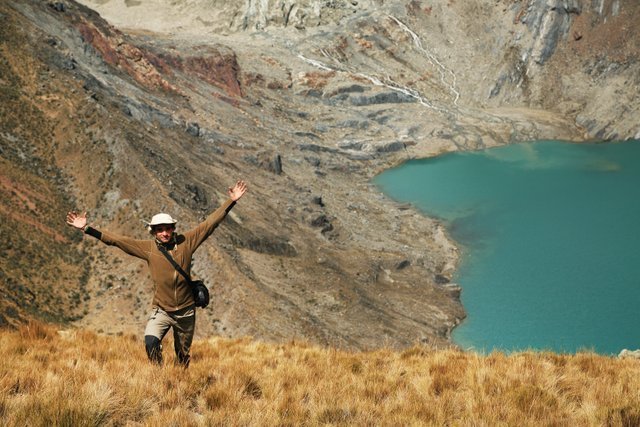

the Big Picture
You can do it! It’s okay to feel unsure about independent travel if you haven’t done it before. You know there will be challenges. See how your personal style of travel* fits with your planned trip. Adjust.
It’s not too much work. You might think DIY travel will take too much time and effort. Relax! It’s never been easier. You’ll get in the groove. And the more you do it, the faster and cheaper it will get.
Your personal commitment. All you need to thrive are basic travel skills, situational awareness and a positive attitude. You can learn the skills, both here and on the road. Practice situational awareness before you leave. Attitude? That’s on you!
Preparedness is huge. Kit yourself well and prepare for constant change. Thorough preparedness will prevent wasted time and money fixing things during the trip. It’s a big boost for your confidence too.
Whoops! Your trip will go sideways at some point. If something bad happens you know where to ask for help*. Good information, planned emergency outreach* and personal fortitude will (almost always) maneuver you out of trouble. It might still hurt, it might still cost, but you’ll get a better outcome.
Enjoy your trip! You choose adventure, or at least a trip with texture, unique events and special memories. You can step or stumble into amazing experiences at any time. Sometimes there’s risk. Within reason, accept it. If you’re a first time traveler, maybe you doubt your abilities. But you’re no different from the most grizzled road warrior. He or she had a first trip too! A mishap is inevitable. Roll with it. You’ll have a story to tell.
Twenty years from now you will be more disappointed by the things you didn’t do than by the ones you did do. So throw off the bowlines, sail away from the safe harbor. Catch the trade winds in your sails. Explore. Dream. Discover.
— Mark Twain

What you need to do
- Release your willpower — DIY travel takes more resolve than letting the travel industry do it for you. It will demand more of you — and reward you for your effort. Plant your feet and do it.
- Learn travel skills — Specific skills will ease your travel logistics, improve your enjoyment, save you money and fortify your safety.
- Carve out travel time* — Some have a gap year or the open vistas of retirement. Everyone else has to claw the time out of their busy lives.
- Admit you can’t travel for free — Clickbait blogs promising you can “travel the world with no money!” will land you in instant trouble. You can do amazing things with little money, but not zero money.
- Work out your style of travel* — Style is how you travel, including your clothing & gear, destinations, pace, transport, accommodation, food & drink and experiences. Meet your minimum standards or you won’t be happy.
- Budget and save — Calculate your travel budget* and adopt strategies to save the money.*
- Believe attitude beats experience* — Basic travel skills are necessary, but attitudes will shape the quality of your trip. Assume you’ll have a great time!
- Ease into it* — If you’re not sure you’re up for independent travel to the back of beyond, you can try easy trips to build your skills and confidence.
- Adopt sustainable travel techniques* — Minimize your impact on the environment and the culture of communities you visit. Spend more of your money at local businesses.
Willpower
Independent travel takes resolve. Planning and preparation will take effort before you leave for the airport. Still, if you’re motivated to go on this trip, maybe willpower isn’t a problem for you.
The hard bits: time and money. Some would-be travelers have time but little money. It’s a common situation for young travelers. Mid-career travelers may have money but little time. Some retirees have both time and money, although the body might not be up for a rigorous trip. No matter where you are on this map of life, you’ll need time, money and health to travel. Any of those could take some serious effort.
Planning takes no willpower because it’s fun. Deciding where to go and what to do is exciting and motivating. No problem there.
Preparation can be easy or hard, depending on the trip. You could pack a bag from your closet, grab your passport and head off to the airport. Or you might need vaccinations and a medical check up. Maybe you need a visa or other documents. Perhaps your debit card and credit card from home will be too costly. You’ll need new ones. And travel insurance? How complicated and boring is that? Then there’s luggage, clothing, tech and other gear. Prep can take some time. Some items are essential, but all preparation checklist items are worth the effort.
 The trip: tempted to let the travel industry do it for you? DIY travel takes more effort than paying to make your vacation hands-off and easy. They take care of all the bookings. If it’s a tour, they shepherd you around to your transport, accommodations and experiences. It’s safe and easy but (with some exceptions in “adventure travel”)… ho hum. You’re another wildebeest in the herd, thundering along with the other tourists. And paying extra for the privilege.
The trip: you can learn DIY travel. Independent travel requires you to make your own arrangements. And that can get tiresome. Anyone can book a flight or a room. But too many travelers spend hours online for every flight and room, questing for the right flight or the best room for a legendary price. The true target is a decent flight or a decent room at a decent price. Booking it fast takes technique*. And then there’s all the other transactions and interactions you’ll have on the road. You must manage them all! The longer your trip and the more destinations you have, the better you’ll get at it.
You need willpower from the get go. To map your adventure. To make time in your busy life. To collect the money for the trip. At home, with day-to-day demands, it’s hard to stay focused. But you must. Pin the departure date on your calendar. Mount a map on the wall. Open a savings account with auto-deposit and stick to it. Book the time off. Get your documents, cards, insurance, luggage, clothing and gear in order.
Going independent is so worth it. Sounds like a lot of work, doesn’t it? But your trip will be more fun and more real if you do it yourself. So buckle up. Breath deep. You can do this.
Time
 Can you find the time to travel? Some travelers have the luxury of time. But if you don’t, it can be a challenge to liberate the time for a big trip. You may feel you have too many commitments, too many tasks to finish, too many people who need you at home. Family, education or work fill your calendar. You push your trip further into the future. Sometimes, the future never arrives.
Some people are blessed for time:
- Banked vacation time — You’ve been able to bank vacation leave over a few years and have a longer period you can take off work in one lump.
- Student gap year — You’ve finished being a student (at least for now) and want to take a gap year.
- Between jobs or contracts — You’re between jobs or contracts and can take a break before the next one.
- Sabbatical or extended time off — Perhaps you can negotiate a huge block of time. You might have to get creative to justify it.
- Retired — Your time is your own and you can do what you want. Limitations may appear around money, health and mobility. A long-term partner may have health or mobility problems or lack of the desire to travel.
No? Then you must make the time. If you have none of these generous blocks of time, you must slice your own path through life’s thicket of commitments. There are many ways to deal with them: negotiate time, beg off responsibility, delay, assign to someone else, trade with someone else, quit…
First, how much time will you need? There are several steps to figure that out. Determine your travel goals, what experiences will fulfill them and where you can have those experiences. And then you can use our Itinerary Planner* to calculate and adjust your trip duration.
Put a departure date on a calendar. Maybe it’s a big guess. But even if you can’t go in the coming months or year, try to set a target date as soon as you can. It’s likely you’ll adjust it, but having a date marked is important for focus and motivation.
Limitations on travel time

 Organizations in continuous operation. If you are the key person in an organization that must stay open or supports employees, it could be impossible to close shop — even for a short time. Many small operators don’t take even short vacations, let alone a longer time to travel. If this is you, there are a few strategies that may help liberate some time:
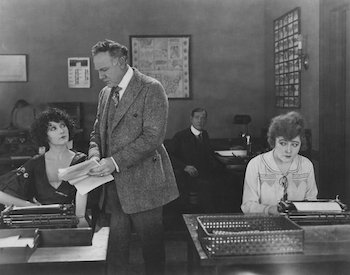 After lack of finances, this has to be the most common reason that people don’t travel more. If you’re employed or on a restrictive contract, you get your annual vacation leave and that’s it — or is it?
  Glued to your job? Even when the time to travel is available, you refuse to take it. Why?
 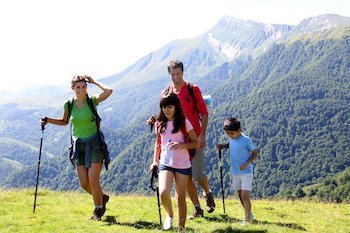 Children are not an obstacle to travel. Too many parents delay travel because of their children. Yet (with a few exceptions) children are not a barrier to travel in your near future.
 Money
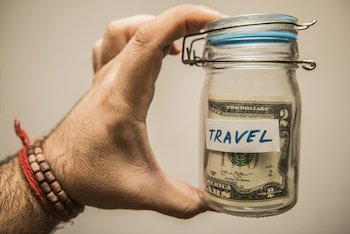 Do you have the money for your trip? Even the most frugal traveler needs seed money. Bloggers trumpeting how you can travel with no money are selling smoke. You can do it, but it takes extreme mental and physical toughness. Otherwise, a moneyless traveler has to rely on the charity of others or casual work.
Know how much you need for your trip and make a plan to save those funds. Most travelers need the entire amount before leaving home. If you don’t have enough when you depart, earning while on your trip is a legitimate strategy, although there’s no option for legal work in most countries.
Budget your trip & save the money
Style of travel
“Style of travel” is how you do it. Budget, mid-range or luxury transport and accommodation? Fast or slow pace? Haute cuisine or street food? Private experiences or part of the crowd? Custom travel clothing or what you find in your closet?
Style is how you spend your time and money. If you have plenty of both, your travel style is pure preference. But if time and/or money are tight, it will narrow your options. For example, if time is short you could spend more to move faster and do more.
Compare your style to your plans. Once you figure out your style of travel, see if it fits with your trip plans. Can you travel as you please to the destinations you have in mind? Can you afford your style there? What adjustments are you willing to make?
Gauge your style of travel
What time of life?
Your age, experience and commitments influence what you can do. That’s not to say a first-time traveler can’t backpack around West Africa or a retiree can’t climb Kilimanjaro. They can and they do. There are mental challenges. You may wonder if you have what it takes. Beyond the self-assessment, time, money, health and stamina could draw practical boundaries (although experience and mental toughness can expand them).
Don’t think you can’t do something. If you have a high tolerance when things go sideways and you can’t speak the language, you can get by anywhere. Whether you’re young or old, West Africa is harder than East Africa or Southern Africa, but it’s still a fascinating, culturally rich region, untrammeled by tourist hordes.
Be realistic about what’s possible. Still, if you want to try a bold adventure, do it. But keep a back up plan ready if it gets to be too much.
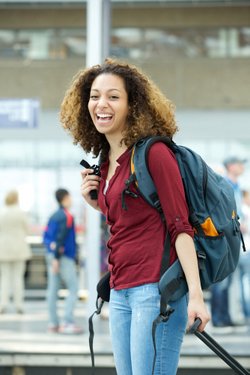 No experience, no loss! Besides lack of money, some might say your lack of experience is a disadvantage. Yes, you’ll make more mistakes than a veteran traveler. But your first big trip is a learning experience. And it comes with the eye-opening excitement that jaded older travelers miss.
  Your maturity and experience will help. You can use accumulated skills and finances to plan, prepare and go on your trip. You’ve dealt with many situations life, from budgeting your household to combat with bureaucrats. These skills are transferable to travel. Bonus: scammers and thieves in foreign countries see young backpackers and retirees as easier targets than you.
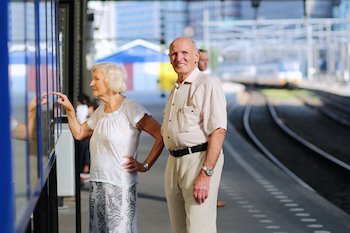 Reject travel industry propaganda. Travel industry marketing always shows retired travelers as tourists who need both luxury and coddling. There are tours, some of them targeted for seniors. There are resorts and high-end hotels. And there are cruises. You’re supposed to reap the posh rewards of your working life. The implication is that you’re incompetent or not tough enough to travel on your own. Just hand over your money and let the travel industry protect you from the real world.
 Travel skills & attitudes
What do you need to know and do to have a safe, affordable and enjoyable trip? There’s no diploma in travel. Anyone can do it with preparation, attitude and experience.
Travel skills are easy. You don’t have to practice until you can play like Hendrix. But the sheer volume of tips and techniques can get confusing. Planning and preparation isn’t that hard. Going to a foreign land and getting by is where the challenge lies. It’s not just booking online and doing the laundry, it’s interacting with foreign cultures, staying safe and conserving your money
Where do you learn? You can use this site, travel forums and travel blogs to learn techniques of proficient travel. Know that much advice from the mainstream media is shallow, low-value or wrong. Bloggers can get extreme, with one advising to save money by not buying travel insurance.
The best teacher is the trip itself. Advance preparation will help prevent common mistakes, but the ultimate school is the road. Once you’ve had your pocket picked or paid too much for a crap room, you’ll know better next time.
Travel Skill #1: Research
 Destination research is essential to easy and enjoyable travel. Assuming you’ve done your pre-departure preparation, you still need to know about each destination and the activities you want to do there. If you’re ill-informed, you’ll go to the wrong places, stay in bad lodging, pay too much for everything, blunder into cultural misunderstandings and more. Your trip will be much less than it could be.
How much research is enough?
◼︎ How big is your destination? — Are you researching an entire country or major cultural zone within a big country? Indonesia has many cultural areas. You need a broad brush, but maybe not so deep on any one place or issue. Or do you need to know about a single city, town, rural area or beach? Yogyakarta is rich in culture. If you plan a longer stay, it’s worth deep research.
◼︎ How long will you stay? — If you will be at a location one day to one week, your information needs are basic: transport and accommodation logistics, local activities, health and security warnings. Bouncing through six places in Java over 10 days? Your main issues will be logistics, although Javanese culture is very deep. The longer you plan to stay in one cultural zone, the more you can enrich your stay. If you’ll be in Bali for a longer stay, there are histories, travelogues, novels, blogs, videos and other material to enrich your experience beyond measure.
◼︎ How difficult are travel logistics? — You need to know more about a place that’s hard to get to or hard to get around in. Small and remote places might have very little accommodation. Health and security may be major issues. Travel to many eastern Indonesian islands can get complicated.
◼︎ Is the culture very different? — The more a culture differs from your own, the more you should learn about it. That will not only enrich your visit, but help you avoid cultural misunderstandings. In Indonesia alone, the Javanese, Balinese and micro-cultures of Sulawesi are different not just from Western culture but from each other.
◼︎ What do you want to do there? — You go places to do things, even if just to stroll the streets and soak up the atmosphere. Get formal information from guide books, tourism vendors and government agencies. But find informal intel from locals, travelers you meet, bloggers and forum posters.
You can never be over-prepared. Research is a rabbit hole. You can spend endless hours reading guidebooks, scouring the internet and plundering the library. But your trip will be easier and your experiences better.
…unless you take your research literally. No matter how much you research, don’t expect the real place and real people to be exactly as your research told you. And don’t attempt to copy experiences found in your research. Stay open to reality being at least a little different and you won’t be surprised or disappointed.
How to research your destinations
Travel Skill #2: Situational awareness
What is situational awareness? It’s part of our evolutionary biology to absorb information through our senses and analyze what is going on. Is that a lion or a gazelle in the tall grass? Do you back-off and get out of there… or do you notch an arrow in your bow? This is “situational awareness” or “mindfulness.” You need it for on-the-spot decision-making and personal security.
Easy at home, harder on the road. At home, you’re so familiar with places and how people behave that you don’t have to pay much attention. When traveling, it’s the exact opposite: you have to pay attention to new stuff every day. Travel floods you with sensual stimuli… an unfamiliar geography, unfamiliar culture, unfamiliar food, unfamiliar everything. You want to stay in the present, your senses all humming, but not overloaded. Your analytical mind has to process it all and think a few moves ahead. You will make decision after decision, involving time, expense and / or risk. Before you know it, you must take action.
Mind blown. A sudden arrival in the middle of India or Brazil or Tanzania might seem overwhelming. But don’t let it deter you. If you’re ill-equipped to start, go slow (“polé-polé” as the Swahilis say). Share your thoughts and decisions with your traveling companion, if you have one. Ask questions of local people, if verbal and sign language permit. You will gain situational awareness skills fast as you travel.
Situational awareness skills set pro travelers apart from newbies. When you’ve refined it, you can go to a strange place with confidence. Improved skill reduces fear because you’re better able to assess a situation, measure risk and make a smart decision.
Basic situational awareness
◼︎ Understand what’s normal — How can you know what’s “normal” when you’re new to a place? Your challenge is to interpret whether what you see is an everyday reality… or whether something stinks. What might look to you like total chaos on a Nairobi street is normal. On a Toronto street the same ferment would have wary cops on the scene in no time. “Normal” is hard to gauge, since it can vary street by street, by day or by night, culture by culture. On an interpersonal level, you need to assess whether somebody you’re with is “normal” or if he or she has a hidden agenda. Cultural differences can lead to a misinterpretation of signals in spoken or body language. The more you travel, the faster and easier you will comprehend what’s going on.
◼︎ Assess what is abnormal — Again, in a new environment it’s hard to realize when things go wrong. As a foreigner, you’ll be the last person to know. So take signals from the local people around you. If they’re looking uneasy, you should be on guard. It’s abnormal if someone plucks you out of a crowd and talks to you in English. He may be a helpful local, but it’s likely he’s a business agent or con-man. (In Delhi, it’s not likely, it’s 100% certain.) Still, it would be a shame to reject that old man who comes up to you at the Shwedagon Pagoda in Yangon… he’s a retired professor, eager to share his culture.
◼︎ Trust your intuition — Many travel bloggers tell you to trust your intuition and “go with your gut.” You don’t want to miss an opportunity for a great experience. So, if it feels right, do it. Still, you don’t want to put yourself at risk. If it feels wrong, it probably is. “Go with your gut” is good advice, but it comes with a warning. Poor situational awareness can skew your intuition towards the wrong decision. The better your situational awareness skill, the more you can trust your intuition. You’ll soon find a balance between recklessness and paranoia. Refined by experience, your intuition is a great tool.
 ◼︎ Look confident and alert — You’re a visitor… and look like one in many places. Visitors are targets because of the lucrative combination of ignorance and money. Even if you’re exhausted, do your best to look like you’re aware. Stand straight, look around, do not use your digital device in public, unplug the earbuds, don’t look at a map. Walk with a purpose. Don’t appear lost or unsure. If accosted, prepare to be polite but ready with a firm dismissal.
◼︎ Situate yourself — If you were fast with a gun in the mythical Old West, you took the “gunfighter’s seat” in the saloon. It was in the corner farthest from the door, with your back to the wall and facing everything happening in the room. (The computer user in this video from Morocco should have been in the gunfighter’s seat.) As a traveler, you’re always looking to reduce risk by putting yourself in a defensive position, whether in a coffee shop or on the street: face the action and keep your wits about you. At night, walk only on well-lit streets where there are other people. There are endless situations. Always position yourself to make a defensive move in an instant.
◼︎ Be ready to escape — If an interpersonal or physical situation goes bad, have a plan for a quick exit. Suppose you need to ditch a commission man, con artist, Lothario or creep. Take a bathroom break (with all your stuff) and vanish. If a backstreet features idle young men sizing you up, flag a taxi and get out of there. No taxi? Ask a professional-looking person or well-dressed student for help. Failing that, enter any business or knock at a dwelling and ask for help.
Situational awareness is a skill you can learn… and retain. Check out this wonderful article on how to develop situational awareness. If you’re a newbie, you can improve it. If you’re an oldie (skill declines in senior years) you can train to maintain. There’s no proving ground like travel. You’re learning as you go.
CAUTION: Mobile phones impair situational awareness. If you’re concentrated on the screen of your phone or have ear buds in, you’re less aware of what’s going on around you. Criminals mark you as a target who isn’t paying attention. Use your digital device or ear buds only when you need not be aware… in your lodge, on long transport, at a restaurant or inside a controlled environment, such as a museum or shop.
Travel Skill #3: Communication
Language skills are unnecessary. As long as you are extroverted enough to approach someone and try to make yourself understood (one way or another) you’ll be fine.
…but still helpful. Your ability to speak a common language will grease your progress. High school Spanish will do amazing things in Latin America. But most travelers have no common language skills at all or find out their high school Spanish fails them.
People are happy for you to try. People in the countries you visit are delighted, tolerant and helpful. They want you to think well of their country and will be patient as you try to express yourself. (If their English is better than your local language, they’ll switch to English.)
How to get by. It takes humility and an ability to use a gesture, simple English words and maybe a translation app.
CAUTION: be careful about gestures. Gestures that are common and benign at home might mean something different in another culture. An infamous example: the “okay” gesture of touching the tip of the thumb to the tip of the index finger to make an “o” is obscene in Brazil. Since you might rely on gestures instead of a common language, research what works and what doesn’t in a new culture.

eric

4 hours with hardly a word
Travel Skill #4: Positive attitudes
Your attitudes make the difference between a great trip and… a not so great trip.
 ◼︎ Confidence — Suppose you’re not that confident when you start out. It’s a guarantee you will gain confidence as you go. Beware false confidence. It’s most common in young, extroverted males from rich countries. That level of confidence is a good thing for travel, but humility must temper it. Take a long pause and scope what’s happening in real time. If, lacking situational awareness, you march off where angels fear to tread, you can get into big trouble. Earn confidence from thorough preparation and experience.
◼︎ Flexibility — You’re not a control freak. You try to build flexibility into your itinerary and you’re open to sudden changes of plans. You know serendipity often leads to the best experiences. As much as you can, you go with the flow.
◼︎ Patience — You know there will be delays when wading through immigration bureaucracy, arguing with taxi drivers, missing a bus and much more. But you acknowledge that being a stranger in a strange land means unfamiliar ways of doing things. You accept that delays can happen any time, so you bring snacks, water and portable entertainment. Then enjoy the journey!
◼︎ Calmness — You don’t get stressed easily, but when you do, you don’t externalize it. If you become frustrated with someone, you realize that direct criticism or expressions of anger are not acceptable in most cultures. Chill and think how to resolve the problem amicably. If you can’t fix it to your satisfaction, accept it with grace.
◼︎ Assertiveness — While you don’t want to lose your cool, you need to make your wishes clear. You’re a visitor, not a pushover or chump. Be careful not to let a cultural or linguistic misunderstanding create a nasty scene. ‘Polite but firm’ works everywhere.
◼︎ Intuitiveness — There will be times when you don’t have enough information to make an informed judgement. If there are no serious consequences for a bad decision, then no big deal. Other decisions are more fraught. Should you trust this guy you just met? He could be a crook, even dangerous, or he could be your window into his country and culture. Trust your intuition.
What? This isn’t you? If you don’t think you fit the profile, plenty of choices exist between eating dust riding the bus in rural Ethiopia and canceling your trip altogether. While you could take an easier trip (below), travel offers you a clean page to work on your attitudes.
The pleasure we derive from journeys is perhaps dependent more on the mindset with which we travel than on the destination we travel to.
— Alain de Botton
You’re made of the Right Stuff. You’re optimistic and unflappable. You believe the decisions you make will work out. But when they don’t, you’re composed. Independent travel opens opportunities for amazing experiences. And it will ambush you again and again. With experience you’ll make fewer mistakes, but fate will still run your plans into the ditch from time to time. Roll with it.
Is your traveling companion also made of the Right Stuff? He or she should have these attributes too — or at least a few. Maybe one of you ends up being the front person when dealing with people and problems, but it’s better to share. But if your traveling companion will fall apart when things go sideways, you might consider an easier trip or a more comfortable travel style. If that still won’t work, maybe you need a different traveling companion… or no traveling companion at all.
How to start with an easy trip
If you haven’t tried independent travel before, ease into it with destinations that have good infrastructure and where the people are used to visitors. Take on more challenging destinations as your confidence and travel skills grow.
[supsystic-tables id=1]
These are very broad factors — you can travel very easily in some countries like Thailand or South Africa. Some mega-cities in middle and poor countries can be quite exhausting for visitors: Mexico City, Jakarta or Lagos, anyone?
These factors can be mixed and matched. For example, you can go to a rich country, but travel slowly and stay in hostels. Conversely, you can travel to a poor country, but move quickly and stay in luxury hotels.
It’s easy to travel in rich countries. What could be simpler than a leisurely and well financed tour of major European cities? But if you want to rush through West Africa on-the-cheap, you’d best be experienced and extremely resilient.
There are well-known “tourist trails,” where you will find plenty of other travelers and the infrastructure is pretty good. Start with one of these and branch out to “the road less traveled” as you gain confidence. That road is where the memories are.
The Try-Out Trip
If you have the luxury of time, you (and whomever you plan to travel with) can take a “Try-Out Trip.” It’s a chance to replicate, as much as possible, the conditions of the “real” independent travel you’re planning.
- Where? — Don’t go too far from home. You don’t want to spend too much time or money on this experiment and you may need to zip back home on short notice.
- When? — You shouldn’t spend too long on a Try-Out Trip. It’s the sort of thing you could do using vacation time.
- Clothing & gear — Pack only as much stuff as you would on your planned big trip. Check our articles on luggage, clothing and gear to get an idea, although it’s not necessary to get new stuff unless you’re certain you will use it on your longer trip.
- Transport — Use the types of transportation you plan for your real trip — train, bus, rental car, bicycle… whatever.
- Accommodation — Stay in the cheapest lodging you’re comfortable with, preferably similar to what you plan for your real trip — budget hotels, hostels, couch surfing.
- Food & drink — Eat as economically as you can. That doesn’t mean eating at fast food chains that you’re not going to find in your big trip destinations. Small local eateries, food trucks, groceries, delis and markets are more like it. If you’re going to a place with distinctive cuisine, try to find restaurants that serve authentic versions of that food — North Indian, South Indian, Arabic, Italian, Caribbean, Thai, Greek, North Chinese and so on.
- Chores — Manage your laundry and other daily chores as you imagine they would be on your big trip. Yep, that might include using the sink and a laundry line.
- Costs — Keep track of your expenses. They will not replicate expenses when you travel abroad, but you will get an idea of the cost categories and gain some insight on how to save.
If your home is in a rich country, conditions could be similar to travel in another rich country. Your biggest challenge could be to control costs, so try some of the cost saving strategies on this site and see if they work for you.
Generally, costs will be less in middle and poor countries, but infrastructure and services will be worse, so you may not be able to replicate conditions of travel in your home country. But you can still push your comfort level down and see how it goes.
If you’re going solo, you’ll get to feel what it’s like being on your own, making all the decisions yourself, interacting with new people every day and perhaps dealing with loneliness or homesickness.
If you’re traveling with one or more companions, you will learn something about your interpersonal dynamics, especially if you test the lower end of your tolerance for discomfort or encounter problems. A good companion won’t get too upset and will work with you to see it through and move on. But it’s possible that your companion (or you!) can’t handle some situations well. That’s good to know before you head out on the Cape to Cairo road.
Maybe you’ll realize that solo travel isn’t for you or that the chemistry between you and your traveling companion isn’t quite right. These are solvable problems that you can address before you leave on your real trip.
Find out more about who is traveling and how solo travel or travel with companionship will affect your trip.
Calling all first time travelers!
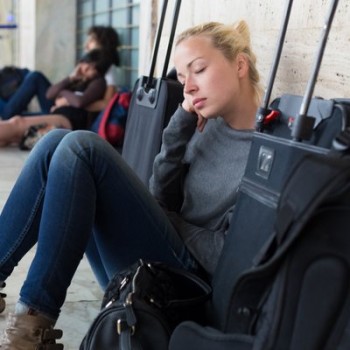 Yes, you can do it too. If you plan and prepare well, you’ll gain the travel skills you need quickly once you’re underway.
There’s no trip as fresh and exciting as your first one. New places, new thrills, new cultures, new food, new friends.
Thousands of inexperienced travelers are out in the world at this very instant and most of them are having a great time.
Join them!