 Celso Pupo / Shutterstock.com
- Match destinations to experiences — The experiences that can achieve your goals can happen in various places or maybe just one.
- Don’t go there! — Pay attention to the security warnings provided by 4 western countries and health warnings posted by the Centers for Disease Control (CDC).
- Research your destinations — Make sure they meet your expectations and are logistically feasible within your time and budget.
Do you know where you want to go? Do you know what experiences you want to have at your travel destinations? You need to think of these as separate decisions. If you’ve got it all figured out already, you could leave this page right now. But stick around — it’s worth a few minutes to confirm your assumptions. Or not.
- Destinations yes, experiences yes — You already know that you want to go to Britain, France, Spain and Portugal to tour four great national museums, go to a Premier League match, take a cooking course in Provence and finish with a vineyard stay in the Algarve.
- Destinations yes, experiences no — You want to go to India, but it’s a big place and you don’t really know what you’ll do with your limited time and money when you get there.
- Destinations no, experiences yes — You want to trek in some beautiful mountains, explore an exotic culture and relax on a beach, but you don’t know the best place to do these things.
- Destination no, experiences no— You just want to travel and are looking for inspiration.
No matter which of these describes you — even if you’re already committed to a destination or two — try the steps below to see whether your proposed travel destinations are right for you.
If you don’t know where you’re going, you’ll end up someplace else. — Yogi Berra
Goals ➔ Experiences ➔ Destinations
Most of us have an idea of where we want to go. Sometimes, that’s pretty much all we have: “I want to to to Europe,” or “I want to go to Thailand.” They know that there’s lots to see and do there — too much, in fact — so no problem figuring out experiences later.
However, if you leave it at that, you may be missing out on a tremendous opportunity to make your travel more personally meaningful, satisfying and fun.
So, if you should consider experiences first, where do they come from? They’re what you do at your destinations to achieve your travel goals.
 Okay, so what are travel goals and why should you have them? Maybe that sounds a bit too structured for something that’s supposed to be fun, even spontaneous. But your journey can be more fun, with room for spontaneous experiences, if you can focus on what you really want out of the trip — your personal goals.
How will thinking about goals affect your choice of travel destinations? It could confirm what you already want. It could make you think about changing at least one destination in favor of a better one. It’s even possible that it would take you to an entirely different continent.
The traveler sees what he sees, the tourist sees what he has come to see.
— G.K. Chesterton
Review travel goals
Assuming you have thought through your personal travel goals…
Has anything important changed for you (or your companion) since the last revision to your goals? Examples could include:
- More or less time for travel.

- More or less money.
- Gain or loss of a travel companion.
- Change in time window available for travel.
- Any other major consideration that could have an effect on your goals.
- A fresh perspective on any of your goals. Feel free to revise the written goals — you might be surprised how your thinking has clarified or changed.
- A shift in goal priorities. If there’s a major reshuffle or if one of the higher priority goals has fallen off the list, you had better take the time for a careful rethink. The quality of your travel experience depends upon going where you really want and doing what really matters.
Not done it yet? Set your travel goals
It’s not just a getaway — your trip is a rare chance to do something big
explore your opportunitiesReview planned experiences
Assuming you’ve listing your proposed experiences…
In order to select destinations, you need your proposed experiences listed in priority order. Check that you’re still okay with your list, including any new experiences that may have come up since you made your list. Criteria could include:
- Companion’s preferences
- Enjoyment — Some experiences are just more fun than other ones that could fulfill the same goal.
- Commitment — If you have to commit to an experience in advance, maybe including advance payment, it will lock you in to being in location X on date Y. Are you okay with that?
- Risk — One experience may involve a higher level of risk than another. Risks can be physical, financial or the risk that you will not achieve your goal.
- Cost
Not done this yet either? Dream your travel bucket list
Do great things at your destinations. Experiences you’ll never forget.
find them now!List possible travel destinations
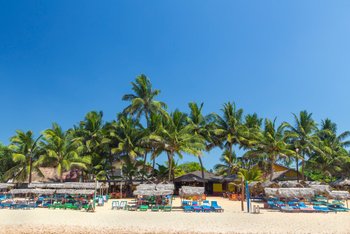
List possible countries where you can do your activities. If you know the specific location within in a country, note that too. This is especially important if the country is big, since you might not be able to go from New York to L.A. or from Delhi to Kochi or from Sydney to Perth. It might help to visualize your destinations with pins in a Google Map.
- Unique travel destinations — Some goals and experiences define your destination for you. There is only one place possible.
- Example — If your goal is to understand your cultural roots, then an experience could be to visit your cultural “homeland.”
- For practical and monetary reasons, this destination could also define where else you can go on this trip. If you’re going to Ireland for your cultural experience, then the UK and parts of continental Europe would be close.
- If you have two “must do” unique experiences that are so far apart that you can’t manage them both with the time and money available, then you’ll have to leave one for another trip. Decide: which one matters most right now.
- Multiple possible destinations — Some experiences could be done in one of many possible travel destinations.
- Perhaps the most common example is beaches. If you want to relax or party at a beach, there are lots of places. Do you know where the beach in the photo is? If the drinks are cold, the sand is clean and water is clear, does it really matter?
- This suggests that the experience — taking it easy at the beach — should be near to any “must do” experience that can be done in only one place.
- If you don’t have such a limiting “must do” experience, then you are free to select a destination with the best combination of all the experiences on your list.
- That beach in the photo, by the way, is the popular stretch at Hikkaduwa, Sri Lanka.
- Cost — Some destinations are notably cheaper to get to than the alternatives. Some are cheaper to stay at once you arrive — you have to factor both into your choice of travel destinations.
- High cost to get somewhere can be justified on a modest budget if the daily cost of staying in the destination is low, especially if your trip is longer than a month.
- For travelers with very little money, a nearby destination with low daily costs may be the only choice.
- Destinations that are expensive to get to and high cost once you get there are better for short stays, such as annual vacations.
Example: If a traveler was starting from New York

- Time — Confirm that you can accomplish at least your “must do”experiences in the same travel destination(s) that can be visited on the same trip without spending too much time and money.
 Secondary activities — Give considerable weight to attractions that may not be directly connected to your planned experiences — cultures that fascinate you, history that comes alive for you, art that intrigues you, food that tantalizes you, music that moves you you and other appealing features. They will add hugely to your enjoyment.

eric

Traveling the real world
Research your destinations
You may already have a good idea where you want to go to do experiences and meet your travel goals. But let’s step back and do a reality check. What do you need to know before you confirm a destination?
Logistics
Familiarize yourself with the procedures for entering the country and then the practicalities of managing your stay there.
- Entry requirements — Will your passport be enough, or do you need a visa? What are the visa requirements? You need to be very clear about that. Match the information in our detailed articles on passports and visas against the entry requirements of each of your destination countries. Some countries, notably in sub-Saharan Africa, also have vaccination requirements for entry.
- Domestic transport — At least know what your options are when you arrive at the airport, land border or port. For night arrival, it’s mandatory to have safe transport figured out in advance.
- Accommodations — What are accommodations like at various price points?
- Food & drink — Is the food great, awful, mysterious? How about hygienic standards? If you have dietary restrictions or preferences, can you find what you need?
I haven’t been everywhere, but it’s on my list.
— Susan Sontag
Culture
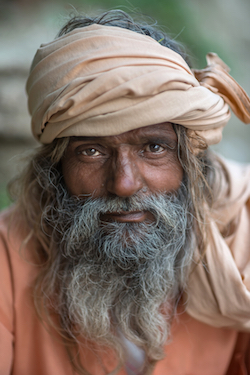 You should understand something about the culture of your destination before you arrive there. What are the people like? What do you need to be sensitive about? What cultural treasures are out there? This information is harder to get, since commercial websites and guidebooks tend to concentrate on tourist highlights, sometimes as if the local people and culture weren’t even there.
If you’re going to a cultural area similar to your own, the differences may be subtle, but “exotic” destinations will require more understanding and sensitivity. Indeed, cultural insensitivity can get you into some uncomfortable situations.
In any country where people eat with their hands (South Asia, parts of SE Asia, the Arab world), eating with your left hand is unclean. That’s the hand used for cleaning oneself in the toilet. No matter how much you wash, your left hand is still considered unclean and you’ll get silent glances of disapproval as you contaminate your food with your left hand.
Wearing inappropriate clothing will also make you at least insensitive to local mores. In most Asian and Latin American countries, anyone wearing shorts outside a beach area or the premises of a lodge is assumed to be another naïve tourist. Female travelers, in particular, need to be sensitive about how much skin (and hair) to expose. This is not true only for Muslim countries, although it’s more pronounced in areas where the main strain of Islam is conservative. Other conservative cultures often have similar views. Failure to dress modestly can attract unwanted attention and worse.
On the other side of cultural interaction, there are ways to be polite that will earn you plenty of cooperation, even friendship. The most direct way is to speak even a few phrases of the local language. Listeners will be astonished, amused and pleased.
It might seem as if there are too many cultural sensibilities to be aware of, but it’s not so hard. Basic courtesy and respect will get you past all kinds of potential difficulties. After all, local people know that you’re a foreigner and will cut you lots of slack, as long as you’re not impolite, disrespectful or boorish.
All journeys have secret destinations of which the traveler is unaware.
— Martin Buber
Security risk
How to Travel offers the following for guidance only and is not responsible for your decisions on travel destinations.

In order of escalation, security risks include street crime, civil disorder, sporadic terrorism and military conflict. Most countries have no serious issues with security, while some countries have only localized problems, like this militiaman in eastern Ukraine.
If you’re going to a stable rich country, the worst you might have to worry about is street crime. Beyond those placid countries, the world gets more unruly. Yet, with due care and attention, there are relatively few travel destinations that you can’t visit. The key is to be informed.
Important: If your government issues a warning to “avoid all travel” or equivalent, your travel insurance will not apply if you go there. In some policies, even the second tier warning, “avoid non-essential travel” will also void your insurance.
The key lesson here is to be well-informed about security and health before you commit to visit the destination. If all or part of your destination country has serious security problems, you need to evaluate whether you really need to go there.
Holidays in hell — is terrorism on your itinerary? Expand
Your government really doesn’t want to rescue you
The four governments don’t always agree on emphasis or detail for a country. When this article was first drafted, all four sites advised against travel to Sinai (Egypt). Canada, the UK and the US were okay with the Sharm el-Sheikh resort town, but Australia was not. The UK even stated what parts of Sharm el-Sheikh were acceptably secure. Not long after that first draft, terrorists operating from Sharm el-Sheikh brought down a Russian airliner. So, while it looks like the Aussies got it right, security issues are always fluid. Try to find current information.
The US and Australia present a catalog of violent incidents over the last two to three years. For some countries, the list is truly scary and might leave the impression that the place is too dangerous to visit.

Incidents where tourists have been targeted by terrorists might give you pause. Such attacks tend occur at popular tourist attractions, where the high body count of foreigners is intended to damage the country’s tourist industry. While such spectacular crimes are quite rare, you should weigh the risks versus rewards. There is only one Luxor temple complex (site of a massacre of tourists in 1997), but there are plenty of safe beaches outside Tunisia (where the jihadi in the photo slaughtered 38 tourists). On the other hand, there are thousands of tourists enjoying Egypt and Tunisia every day without incident.
Where there’s a history of violent incidents — from street crime to civil disorder to military conflict — you must arm yourself with current local knowledge and common sense. Local news media there may be under political pressure not to report what is going on, but your embassy or high commission should know.
Your government’s main objective with their traveler advice is to keep you out of trouble and not become a problem for them, so there’s a strong motive for them to be excessively cautious. They’re also slow to reduce level of risk for a destination. There’s no incentive for them to be less cautious, lest one of their citizens who gets into trouble accuse them of not issuing sufficient warning. You have to judge whether government advise should make you alter or cancel your plans. Or not.
Health risk
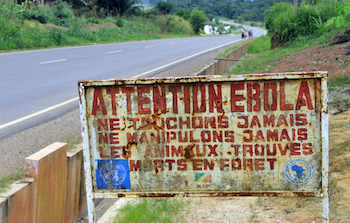 Health risks include endemic diseases (like malaria), outbreaks of serious contagious diseases (like cholera, typhoid or ebola) You will want to take serious precautions for malaria and avoid areas suffering from the other contagions altogether. Other diseases merit your attention depending upon your activities. Doing medical volunteer work? Beware of HIV and various strains of hepatitis. Going caving? See whether the local bats have a rabies problem.
While the four government sites all deal with health on a country-by-country basis, a better source is the US Centers for Disease Control, Traveler’s Health. You can drill down for information on every country, with links to topic pages on almost every health risk. It’s easy to use, comprehensive and fairly up-to-date.
The other government websites seem to have a bit more time lag on disease outbreaks. They may not cite specific locations or regions either and simply issue a blanket warning for the entire country.
Get current information prior to arrival

If your destination country has a strong warning about security or health, try to get a current update as your date for arrival in the country nears.
- Government bulletins — Most governments have a service you can sign-up for to receive e-mailed bulletins about your destination countries. If your country doesn’t have a high quality bulletin, try signing-up for one offered by another country.
- Traveler registration — You can also register your plans online with your embassy or high commission. This is worth doing in countries with security risks or if you plan to go to less-traveled corners of the country. If you go missing, they’ll know where to look.
- Embassy or high commission websites — Your diplomatic representatives in the country should have current information on security and health that could affect your plans. Embassies, high commissions and consulates usually post this information on web pages, but they may not update those pages as often as they should — check for dates on the security and health pages.
- Consular services e-mail — If the risk situation in the country looks like it’s changing fast, you can also email your diplomatic representatives. They’re busy, so give them a week or two to get back to you. If nothing much has changed, they may just refer you back to their website. But, if security or health risks have worsened, you’ll likely get a quick and blunt reply, urging you not to visit.
- CAUTION: your travel insurance may be void! — If you become aware of any severe health or security threat, check your government’s website for an upgraded travel warning. If you travel to a country or area where your government has issued a strong warning, or if you fail to leave promptly once a warning has been issued, your insurer may refuse coverage. Check the fine print on your policy.
Where is help when you need it?
Check the website of your government ministry or department responsible for foreign affairs. Examples:
- United States State Department.
- United Kingdom Foreign & Commonwealth Office
- Australian Department of Foreign Affairs & Trade
While the US and UK seem to have embassies and high commissions almost everywhere, other countries share representation. Canadians can turn to the Australian High Commission in Papua-New Guinea, while Australians rely on the Canadian Embassy in Tunisia. Smaller nations may bundle services for several countries in one, so your representative for a destination may be in a neighboring country.
In some special cases, notably where the security situation has deteriorated, representation may be limited. Although, at time of writing, you’re crazy to go to Syria, the US maintains emergency services only through the US interest section of the Czech Republic embassy. The UK advises British nationals to contact any EU embassy there — without any list or links. There are hardly any EU nations with embassies still open. Australians can seek assistance at the Romanian Embassy, although it too has reduced services. Canadians must refer to their embassy next door in Beirut, Lebanon.
No matter your citizenship (including US and UK), you will need the emergency contact telephone and e-mail for consular services in your destination country. This includes countries that are considered safe, since you can still require assistance over a traffic accident, legal problem or other issue.