
- Travel “style” is the comfort you need and can afford — It includes your standards for clothing & gear, transportation, accommodation, food & drink and experiences, as well as the pace at which you move.
- Higher style = higher cost — It’s no surprise that a higher class of transportation, more comfortable lodging, better food etc. comes at a higher cost.
- If you go too low, you won’t be happy — You can try to lower your standards to save money, but at some point you could sink below your own minimum standards (or those of a traveling companion).
- Responsible travel style — Your style also reflects your effort to minimize negative environmental and cultural effects of your travel, while increasing local economic benefit. It need not cost more and often costs less.
Travel style is how you travel. It’s your minimum requirement for comfort. To enjoy the journey and the destination, you need to be physically and mentally fresh day after day. That freshness is the result of your personal preferences for:
- Gear & clothing
- Destinations
- Pace
- Transport
- Accommodation
- Food & drink
- Experiences
Many travelers are now more conscious of the impact of their travels. You can make it part of your style to minimize negative impacts and maximize the positives.
When you (and your traveling companion, if you have one) can stay comfortable, content and within budget for weeks or months, you have found your travel style.
Components of travel style
Your personal travel style will blend your choices in each of these categories. They are all associated with expenses, so your decisions will be constrained by your budget.
Gear & clothing
Your gear and clothing affect the quality of your travel every day.
Luggage that is hard to move around or breaks when you need it to perform, clothing that’s heavy, bulky or dries too slowly, a smart phone with a battery that can’t last a full day — all these will aggravate you day after day.
Instead, you can get luggage appropriate for your trip, clothing that is light, packs small and dries quickly and a smart phone that lasts the day or takes a spare battery.
All gear and clothing choices are extensively discussed in our Prepare section.
Destination
 It would be great if any destination could serve your travel style, but that’s simply not true.
Luxury travelers will find no options at all in many of the most fascinating locations, while the wallets of budget travelers can be bled dry in some world-class cities. That doesn’t mean you can’t go, but you may have to adjust your style.
- Rich countries — If comfort, speed and service quality are essential to you, it’s easier to travel in rich countries. This is because higher quality travel infrastructure (notably transport and accommodation) is readily available in most locations. Rich countries cost more for a given quality of service.
- Poor and middle countries — Good quality infrastructure is often limited to major cities, or, in the poorest countries, to perhaps a single airport and high-end hotel that exist to serve the local elite in the capital. Budget style travelers often choose poor and middle countries because cost-per-day is lower for similar quality. A room of a certain quality that goes for $200 in New York might cost $30 in Bangkok.
- Major cities — Big cities contain many of the attractions and activities we want, as well as major transportation hubs and the widest selection of retail. Capital cities have embassies and consulates. In poor countries, major cities (and sometimes resorts purpose-built for fly-in foreign tourists) may be the only places with the infrastructure for high-style travelers. Availability of “quality” infrastructure declines — sometimes alarmingly — as you move to secondary cities, towns and rural areas.
- Tourist traps and traveler ghettos — These enclaves, whether in a city or at a resort area, can usually serve all styles of traveler. They have a wide range of accommodation, services, amenities and international brand retail goods, but prices tend to be higher.
Pace
Pace is the speed of your travel — leisurely, manic or anything in between.
- Time available — Regardless of your preferred comfort level and budget, you must strike a balance between your available travel time and the number of destinations and activities in your itinerary. Travelers with limited time often try to do too much.
- Budget — Speed may also be constrained by your budget. The common budget travel solution is to travel slowly, using buses and trains instead of airplanes. It also means going to fewer places, but perhaps staying longer at a lower cost per day.
Independent travel has been associated with a slower pace because independent travelers usually have a larger block of time than vacationers. Yet covering vast swathes of the planet on a year-long round the world trip can still be exhaustingly fast.
In contrast, a three week vacation in a single destination can be slow and relaxing if you don’t force yourself into a frenetic program of activities. It’s fine to “see the sights” of Rome or Delhi or New York, but it’s also rewarding to have some unprogrammed time for new opportunities that pop up or just for wandering, soaking up life on the streets.
You need to find the pace you are comfortable with, but you’re not locked-in to it as long as you haven’t committed yourself to booking dates. If you’ve built flex time into your trip, you can slow down. If you have the energy and finances, you can speed up.
Transportation
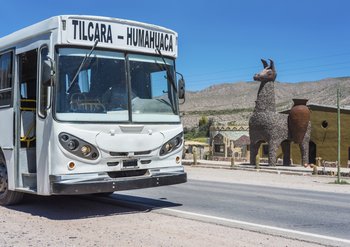 Transportation to your next destination is the very heart of travel.
You will spend plenty of time in transit, so it’s important to enjoy it as much as you can. In fact, you should plan to make the best of getting from A to B, by avoiding the most uncomfortable transport modes and preparing for the trip with food, drink and a window seat.
- Transport type — There are many ways to travel, including air, rail, bus, ship or ferry, private vehicle, hired car, taxi and more. Your travel style will be your preference for comfort and speed versus cost-saving. If you’re a high-style traveler, maybe you’ll fly from Bangkok to Chang Mai, instead of taking a 12-hour train. If you’re a budget traveler, the train — or even a bus — might be your choice.
- Experience quality — Your choice of transport is part of the experience. You see nothing by flying. But, on surface transport, you mingle with locals and see the country unfold before you. While many travelers have a Bus-From-Hell story, some trains and boats are wonderful.
- Transport class — Is it worth it to fly business-class from Bangkok to Chang Mai? If you go by train, which class of carriage will you choose, chair or sleeper? For most travelers, a higher-class flight is not worth the big bump in price, but a better class of train carriage or bus is worth the modest extra cost.
Accommodation
Accommodation is perhaps the biggest style decision, since a retreat from the bustle of the street and getting some good rest are absolute requirements. You’ll be renting a place to sleep almost every night, so accommodation will likely be the most costly expense category of all. The key is to know your minimum standards and then stick as close as you can to them when looking for lodging. It might take some experience before you know your own limits with precision.
- Location — You want your lodge to be near to your activities or the transport hub you plan to use. Lodges near to popular attractions and activities tend to cost more, sometimes much more than more distant accommodations. You also want your lodge to be in a safe district, with access to local transport (taxis or tuk tuks at least, if not buses or urban rail).
- Lodge services — Do you need a concierge? Nice restaurant? Pool, spa or gym? Laundry service? Or is a clean, basic, secure room all you need? The range of choices is huge, at least in larger cities. Smaller locations may not have much choice — maybe no “high quality” lodging at all.
- Room quality — Do you need air-conditioning? Private bath? Cable or satellite TV? Extra pillows? Luxury travelers pay dearly not to be disappointed, but as you go down the cost ladder for accommodation, you will encounter rickety fans, hard beds, dodgy plumbing, mosquitos, bad WiFi, excessive noise and other annoyances.
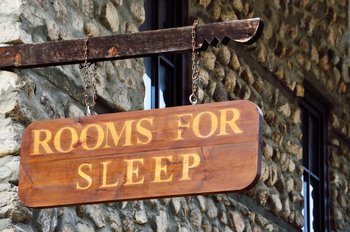 Since you’ll be staying in a different room in a different lodge very often, it’s good to develop some tolerance for shortcomings in quality. Whether the problem is unacceptable depends upon how much it bothers you and what you paid. A hard bed in a cheap hostel might be “getting what you paid for,” but could be unacceptable in a mid-range hotel. If you use our recommended BIASOA method of arranging accommodation, then no matter how bad it gets, you’re only stuck with it for one night.
Food & drink
Every food & drink decision is a style decision. Your menu includes:
- Restaurants — The highest cost option, whether you eat mostly in high-class restaurants or go for cheaper places. Restaurants in high-income countries can cripple a tight budget.
- Street food — Cheap, usually tasty, often of dubious nutritional value, sometimes unhygienic.
- Markets and food stores — Your cheapest choice, but depends upon your willingness to do food preparation and staying where there are facilities to do so. The additional cost of a room with cooking facilities can wipe-out cost savings on the food itself. Hostels often have communal kitchens.
- Delicatessens — Where available, delis can be the best option of all. They are cheaper than restaurants, but more expensive than the other options. Obviously, there’s little or no food preparation involved. You might have a choice of healthy foods and hygiene should be superior to street food.
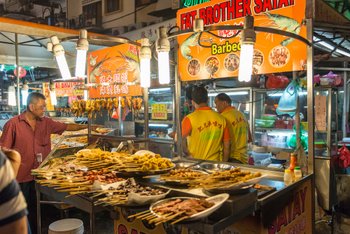
Saigon Photography | Shutterstock
Unless you’re going to eat at restaurants for every meal, you’ll mix these choices as you travel. Making a consistent style choice to eat and drink cheaply can save a lot over time, but don’t deny yourself a great culinary experience just to save a dollar.
Limiting alcohol, tobacco and recreational drugs can also save plenty, especially in rich countries, although these “vices” can be remarkably cheap in most poor and middle countries.
Experiences
Experience is what you seek to do at a destination. Most places have some fine free experiences. But most of the stuff you’ll want to do has some cost involved. And some really cool activities are budget-busting expensive.
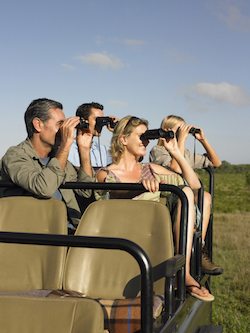
- Spend on experiences! — Here is where all that cost-cutting of other expenses pays off — even a budget traveler should splurge on an incomparable experience. Would you travel to Eastern or Southern Africa and not go on a safari?
- Class or grade of activity — For many experiences, you can choose different classes or grades. You could go on a short group scuba trip to a worn reef, or you can book a private boat for a longer trip to a pristine reef. You could jump on a hot tour bus with 40 other tourists and a guide with a bad microphone, you could hire a private vehicle and guide.
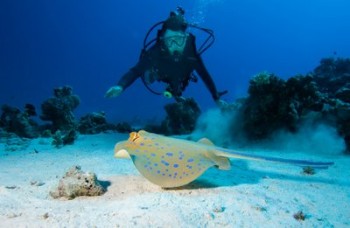 The long-term budget effect depends in part on the type of experiences you like. If you seek the museums at every destination, the cumulative cost is not that much, but if you search for adrenalin sports at every destination, then total activity costs can become huge.
Your travel “footprint”
Make no mistake — as a traveler, a foreigner and a consumer, you will have environmental, cultural and economic impacts on the places and people you visit. We call this your travel “footprint.” By using a menu of travel techniques, you can reduce the environmental and cultural impacts and increase the economic impacts. Your travel won’t be perfect, but you can incorporate a Friendly Footprint into your travel style.
- Reduce environmental impact — Minimize air travel. Reduce your “western” consumption habits for water in plastic bottles, electric power, private transportation and consumer packaging. There are two cost effects. First, your own expenses can be reduced. Second, there’s the ecological benefit of not damaging the local environment as much as less friendly travelers.
- Reduce cultural impact — Be mindful of your host culture, treat people as individuals worthy of your respect and don’t impose your foreign values on them. Take your cues on manners and dress from the locals. Listen more and talk less. It’s wise not to criticize. Be generous with your patience and courtesy. Leave your hosts thinking well of people from your country.
- Improve economic impact — Buy local goods and services. Buy directly from the producers or service providers, or at least not at the end of a long supply chain. Again, there are two cost effects. First, local goods and services are often cheaper than major brands or chains. Second, you can have a very beneficial effect by choosing a local business that also buys in the community rather than another one that takes revenue out of the community or even out of the country.
Assess your travel style
Travel varies from the extreme backpacker, who eats street food and sleeps in “flea bag” lodges, to Grand Tour 5-star expeditions in the fashion of 19th century aristocrats. And everything in between.
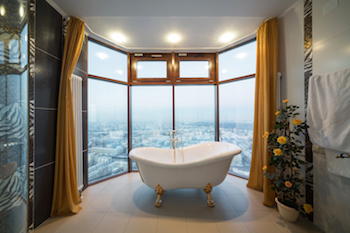 There’s no “correct” travel style. Some budget travelers disparage those who spend more for “unnecessary” comforts while those with higher comfort requirements can’t understand how budget travelers can possibly enjoy themselves in such basic conditions. None of this matters — if you’re happy with your choices and they fit your budget, then no problem.
You probably have a good idea about what your style will be. Just to be clear, think about the seven components above and write down two sets of choices.
- Maximum style — The best guide here is any travel you’ve already done. What style made you happy. If you can replicate this style in new destinations, you should be alright. If you’re accustomed to the quality of a 4-star London hotel, you can surely find that in many major cities, even in poor countries. But you won’t find it in most of the smaller (and more interesting) destinations. Suck it up. You’ll survive.
- Minimum style — This is probably guesswork for you. You’re thinking how far you can compromise your comfort standards to save money. Caution is warranted: you should not to assume you can achieve too steep a cut in your normal comfort levels, even if your budget is low. Trying to push your style down is something to attempt once you’re on the road, not an assumption to plan your trip around.
- Traveling companion(s) — If you are traveling with another person (or more than one) do you have a shared style? Discuss your expectations and try to be clear — disagreements on style and the costs associated with it are one of the main causes of discord on the road.
Adjusting your style
There’s no reason you can’t change your style en route.
- Downgrades — Most often, travelers try to downgrade their styles to reduce cost-per-day, allowing them to extend the duration of the trip or pay for a great activity.
- Upgrades — These are usually the result of travelers getting tired of a style below their comfort level, an illness or just a splurge for whatever reason. An unhappy travel companion may also result in an upgrade. Making an upgrade without a big budget would normally result in a reduced trip duration.
- Pushing the limits — Don’t assume that you (or your traveling companion) can make the transition from business-class traveler or resort-going tourist to budget backpacker and be happy about it. It’s not just the quality of your rooms. Generally, the less money you spend per day, the more tasks you have to do yourself and the more hassles you will encounter in completing them. This is true regardless of destination.
Costing your style
Using our Travel Budget Template (we tell you where to source the numbers), you can make a reasonable estimate of your whole trip budget and make adjustments as required.
Travel style, boiled to its essentials, is your ability to afford your preferences. The longer your trip, the more destinations you include and the more fluid your plans, then the harder it is to budget accurately.
- Budget — The amount you have for the trip (not including pre-departure expenses).
- Cost per day — Since your preferences relate to purchased goods and services, you can translate your style into cost per day for the whole trip.
- Trip duration — This is the number of days you want to travel.
If you don’t know how long you can travel on a known budget and style (cost per day):
Trip duration = Budget ÷ Cost per day
If you don’t know your style limit (cost per day), but know your budget and trip duration:
Cost per day = Budget ÷ Trip duration
If you don’t know what budget you need for a known duration and style (cost per day):
Budget = Trip duration X Cost per day